House flipping television has spent the last two decades popularizing a seductive narrative. An investor buys a distressed, neglected home, completely guts the interior, and installs commercial-grade ranges, bespoke white oak cabinetry, imported Italian porcelain tile, and dramatic waterfall quartz countertops. In the final five minutes of the episode, a bidding frenzy erupts, and the flipper walks away with a record-setting payday.
In the real world of residential real estate, that script rarely plays out according to plan.
One of the most dangerous traps an investor can fall into is over-improving a property for its surrounding neighborhood. It is an easy mistake to make, particularly for creative investors who take genuine pride in craftsmanship or newer operators who confuse their personal design tastes with sound underwriting. Yet real estate valuation is an unforgiving discipline governed by geography, demographic economics, and strict lending guidelines. When an investor spends top-dollar capital in a middle-market neighborhood, the market almost always responds with indifference.
Understanding why over-improving destroys profit margins, how it alienates prospective buyers, and how to calibrate a renovation scope to the exact realities of the street is fundamental to running a sustainable investment business.
The Neighborhood Ceiling: Understanding the Law of Diminishing Returns
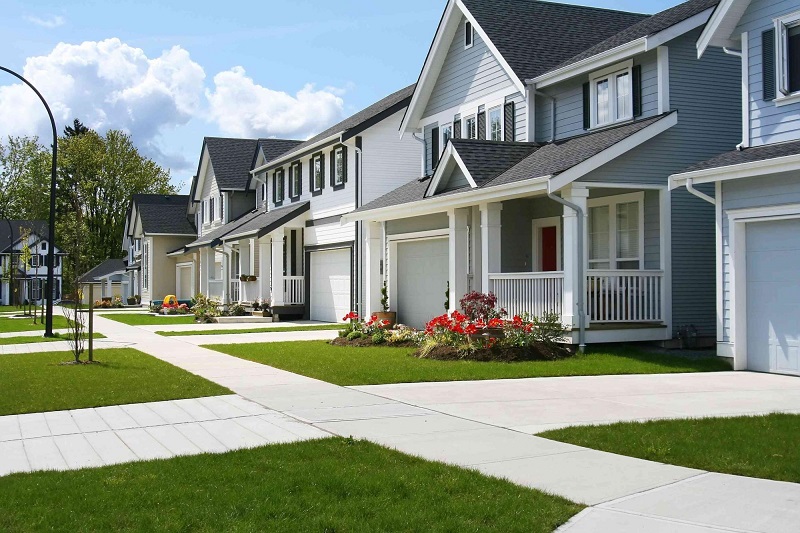
Every residential enclave, whether an urban subdivision, a post-war inner-ring suburb, or a rural township, possesses an economic price ceiling. This ceiling represents the absolute maximum dollar amount that buyers are willing or able to pay to live in that specific geographical footprint.
When you purchase a property at a discount, your potential profit lives in the spread between the acquisition cost plus renovation expenses and that neighborhood ceiling. In a balanced investment, every dollar spent on rehabilitation yields a tangible, measurable increase in market value. However, once a property reaches the prevailing finish level of the top-performing homes in the area, the law of diminishing returns takes hold with devastating speed.
In classical appraisal theory, this phenomenon is rooted in the principle of regression. This principle dictates that a high-value property surrounded by homes of lower quality and value will naturally be dragged downward toward the average level of the neighborhood.
If the surrounding homes on the block feature eight-foot ceilings, laminate flooring, and one-car garages, pouring money into imported marble backsplashes, heated bathroom floors, and architectural landscaping will not magically lift the neighborhood into a luxury enclave. Instead, the neighborhood will pull the value of your high-end improvements down to its existing baseline. You end up paying luxury wholesale prices for materials and labor while collecting standard neighborhood retail prices at resale.
The Appraisal Trap: The Cold Reality of Comparable Sales
Perhaps the most catastrophic consequence of over-improving a flip is running headfirst into the hard wall of the mortgage appraisal process. An investor might argue that if an emotional buyer is willing to write an offer for a record-breaking price, the investment was a success. However, finding a willing buyer is only half the battle; getting the transaction funded is what actually generates revenue.
How Appraisers Evaluate High-End Finishes
Unless your buyer is paying entirely in liquid cash, their mortgage lender will hire an independent licensed appraiser to verify that the property provides sufficient collateral for the loan amount. Appraisers do not operate on subjective emotions or aesthetic appreciation. They are bound by rigid underwriting standards established by government-sponsored enterprises and mortgage regulatory bodies.
Appraisers determine value through the lens of recent closed comparable sales, usually looking within a half-mile to one-mile radius over the preceding three to six months. When an appraiser compares your over-improved home against standard neighborhood sales, they use standardized line-item adjustments.
An investor may spend $15,000 on an ultra-luxury appliance suite, but an appraiser evaluating a median-priced neighborhood will typically credit that upgrade as a modest, standard quality adjustment of $1,500 to $2,000. The remaining balance represents unrecoverable capital. The appraiser cannot simply invent a brand-new pricing tier for a neighborhood because a flipper selected exotic materials.
The Appraisal Gap Dilemma
When the appraisal inevitably lands tens of thousands of dollars below the contracted purchase price, the deal immediately enters a state of crisis. The lender will only calculate the loan-to-value ratio based on the appraised amount, not the agreed-upon sales price.
This leaves the transaction with three painful outcomes:
-
The buyer must bridge the appraisal gap entirely out of pocket with additional personal cash.
-
The seller must swallow their pride and reduce the contract price down to the appraised valuation.
-
The transaction terminates, and the property returns to the active market.
In middle-class and entry-level submarkets, buyers rarely possess tens of thousands of dollars in surplus liquid savings to bridge large appraisal shortfalls after paying their down payment and closing costs. Consequently, the investor is forced to either renegotiate down to the neighborhood ceiling or watch the deal collapse.
When a listing falls out of contract and returns to the market, it acquires an immediate stigma, inviting secondary buyers to submit aggressive lowball offers.
The Target Buyer Paradox: Misreading Local Market Demand
Over-improving a home creates an irreconcilable disconnect between the product being offered and the financial realities of the people who actually want to live in that location. Every neighborhood appeals to a specific buyer demographic with defined income levels, family needs, and life priorities.
The Problem of Household Income Constraints
In starter-home and working-class neighborhoods, prospective buyers are intensely payment-sensitive. With modern mortgage interest rates and rising insurance premiums, buyers are qualifying right at the edge of their debt-to-income limits.
Every additional ten thousand dollars added to the sales price increases the required monthly mortgage obligation. A young family or first-time buyer looking in a modest school district is searching for a clean, mechanically sound home that fits their monthly budget. They need an updated roof, a functioning heating system, clean plumbing, and durable surfaces. They are not willing, nor are they financially able, to take on an extra $300 a month in debt service just to have hand-carved limestone fireplace mantels or automated ambient lighting.
The High-Net-Worth Reluctance
The alternative theory flippers often lean on is that high-end finishes will attract an upscale buyer from outside the immediate neighborhood. This assumption almost always proves false.
Affluent buyers who have the financial capacity to spend top dollar on designer amenities expect the neighborhood infrastructure to match the quality of the house. They prioritize top-ranked public school districts, walkability to fine dining, manicured streetscapes, and low surrounding traffic density. They do not want to exit a $750,000 master suite only to look out the window at a neighboring driveway filled with industrial work trailers or peeling chain-link fences.
By over-improving the house, you build a home that local buyers cannot afford, in a location that affluent buyers refuse to consider. You effectively strand the property in an economic no-man’s-land.
The Silent Profit Killer: Extended Days on Market and Carrying Costs
Real estate investing is fundamentally an asset-velocity business. Profitability is determined not just by the gross spread on the final closing settlement statement, but by the annualized return on working capital. Over-improved properties invariably take longer to sell, and extended market exposure is a silent killer of investment returns.
When a home is priced above the neighborhood ceiling to recoup an inflated renovation budget, it frequently languishes on the market for months. Prospective buyers see the inflated price tag, realize it exceeds the neighborhood norms, and choose to watch from the sidelines.
Meanwhile, the investor continues to pay monthly carrying costs, which typically include:
-
Interest payments on high-cost short-term hard money or bridge loans.
-
Builder’s risk and vacant property hazard insurance premiums.
-
Local municipal and county property taxes.
-
Active utility expenses for heating, cooling, and water.
-
Ongoing staging rentals and yard maintenance contracts.
On an active flip, these holding expenses can easily burn between $3,000 and $7,000 per month. If an over-improved property sits on the market for four additional months before the investor finally relents and cuts the price to meet market demand, the carrying costs alone can erase thirty thousand dollars in projected net earnings.
When you factor in the inevitable succession of public price drops, prospective buyers begin to smell desperation. What could have been a quick, profitable ninety-day project transforms into a nine-month slog that barely breaks even.
Finding the Renovation Sweet Spot: How to Calibrate Scope
Avoiding the dangers of over-improvement does not mean cutting corners, installing substandard materials, or doing sloppy work. The objective is to match the property to the top quartile of the immediate neighborhood, giving buyers the best version of what they already expect, without crossing into an alternate pricing universe.
Study the Upper Tier of Closed Comps
Before finalizing an architectural scope of work or signing a general contractor agreement, spend significant time analyzing the top 10% to 15% of recent neighborhood sales. Pay close attention to the specific materials and fixtures featured in those listing photographs.
If the highest-selling homes on the surrounding streets achieved their benchmark numbers using prefabricated shaker vanities, quartz remnants, and luxury vinyl plank flooring, there is zero financial justification for specifying custom-built walnut cabinetry, slab marble, or site-finished wide-plank white oak. Meet the standard set by the top performers, add clean execution and appealing neutral paint, and stop there.
Focus Capital on Structural and Mechanical Integrity
Buyers in entry-level and median-priced neighborhoods value functional peace of mind far more than high-maintenance luxury. If you have discretionary renovation dollars left in your contingency reserves, allocate them toward deferred maintenance rather than cosmetic excess.
Investing in a new architectural shingle roof, updating an outdated electrical panel, replacing cast-iron sewer lateral lines, or installing a modern, high-efficiency heat pump will build tremendous confidence during the open house and inspection phases. Buyers will happily pay a fair, competitive market price for a home when they know they will not have to replace an air conditioning condenser or repair plumbing leaks six months after moving in.
Consult Local Listing Specialists Early
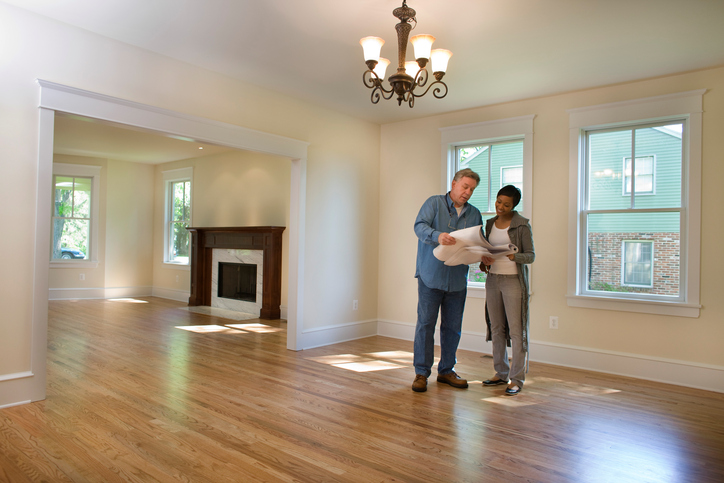
Do not design your renovation in a vacuum. Before swinging a sledgehammer, walk the raw property with two or three active local real estate agents who sell significant volume within that specific zip code.
Ask them direct, practical questions about local consumer preferences: What finishes are current buyers demanding? What features trigger immediate price resistance? What is the absolute highest price a buyer has paid for this floor plan in the last six months?
Local agents talk to active buyers every weekend. Their boots-on-the-ground feedback will tell you immediately whether adding a third bathroom or converting a garage will actually deliver an investment return, or if it will simply serve as an expensive gift to the next occupant.
Successful real estate flipping requires strict emotional detachment. A flip is an investment vehicle, not a personal design portfolio or a canvas for artistic validation. By respecting the natural economic boundaries of the neighborhood, prioritizing high-value functional updates, and keeping your finish levels aligned with local purchasing power, you protect your capital, shorten your holding timelines, and build a consistently profitable investing business.