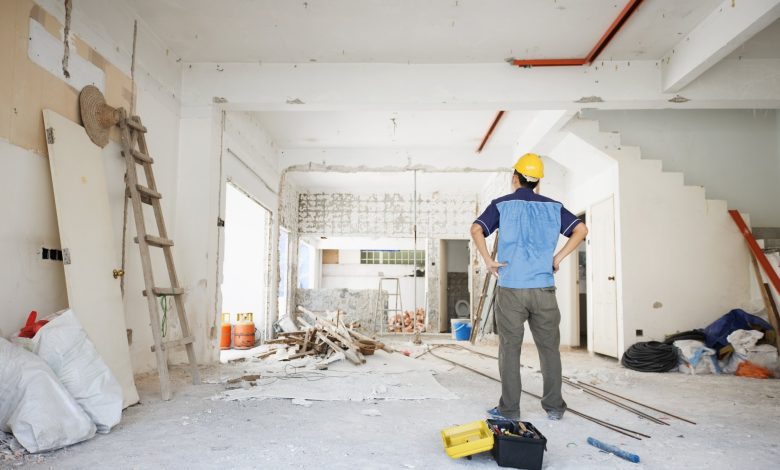
In the playbook of traditional real estate investing, few rules are as celebrated as purchasing the worst house on the best block. The strategy sounds bulletproof on paper. You acquire a neglected property at a steep discount, invest sweat equity or managed renovation capital, and let the surrounding high-value homes elevate your equity.
When that rundown property sits inside a pristine master-planned community or a neighborhood governed by an aggressive Homeowners Association (HOA), aspiring flippers and ambitious first-time buyers believe they have struck gold. The logic seems undeniable: the surrounding neighborhood is already fully stabilized, manicured, and desirable.
In reality, that neglected property is not an untapped goldmine. It is an active legal and financial minefield.
Fixer-uppers succeed on agility, aggressive budgeting, trial and error, and flexible timelines. Strict HOAs, by stark contrast, operate on absolute uniformity, bureaucratic oversight, rigid aesthetic standards, and punitive enforcement. Attempting to execute a comprehensive home renovation under the watchful eye of an unyielding board of directors is a fundamental mismatch that regularly turns projected windfalls into devastating financial traps.
The Fundamental Clash of Opposing Philosophies
To understand why this combination goes wrong so quickly, you must examine the core missions of each entity. An investor or homeowner tackling a fixer-upper needs to minimize costs, experiment with materials, stage heavy equipment, and solve unforeseen structural problems on the fly. Renovation is, by its very nature, an untidy and disruptive process.
An HOA exists for the exact opposite purpose. Its founding mission, codified in its Declaration of Covenants, Conditions, and Restrictions (CC&Rs), is to preserve community aesthetics, eliminate neighborhood nuisances, and protect property values through enforced uniformity. To an active HOA board and its property management company, your renovation is not a noble effort to improve the street. It is an active violation of community peace, a logistical eyesore, and an immediate threat to the pristine standard every other dues-paying resident expects.
When you purchase a property in an HOA, you sign a legally binding contract agreeing to subordinate your personal property rights to the collective rules of the community. In a move-in ready home, these rules mean keeping your lawn mowed and putting trash bins away on time. In a home requiring extensive structural and cosmetic rehabilitation, those same rules become an suffocating operational straitjacket.
The Bureaucratic Quagmire of Architectural Review Committees
The single greatest hurdle to renovating in an HOA is the Architectural Review Committee, commonly known as the ARC. In standard non-governed neighborhoods, pulling municipal building permits allows you to begin work immediately. In a strict HOA, municipal permits mean virtually nothing until the association’s volunteer architectural board grants its formal written blessing.
Paralysis by Board Review
Most ARC committees meet only once a month, and some meet quarterly. Community covenants routinely give these committees thirty to sixty days to review and respond to any exterior modification request.
If your architectural plans omit a minor technical detail—such as the exact reflectivity percentage of window glass or the specific latin name of a replacement shrub—the committee can reject the application outright. You are then forced to amend the paperwork and wait another full review cycle. While you wait through consecutive sixty-day review periods, your subcontractors move on to other paying jobs, material prices fluctuate, and your financing clock continues to tick.
The Elimination of Budget-Friendly Alternatives
Sweat equity relies heavily on finding cost-effective solutions. A traditional renovator might source surplus architectural shingles, purchase clearance exterior doors, or use high-durability modern composite siding to keep costs down.
Strict HOAs actively dismantle this cost-saving strategy by enforcing hyper-specific architectural design spec sheets. Covenants often dictate:
-
The exact three paint manufacturers and six approved color codes you may use on exterior trim.
-
Specific roofing materials, occasionally mandating expensive concrete tile or cedar shakes instead of affordable architectural asphalt shingles.
-
Strict garage door designs, requiring carriage-style wooden doors costing triple the price of standard insulated steel units.
-
Rigid landscaping palettes specifying the exact mature caliper of replacement trees and the precise species of sod permitted on the front lawn.
By removing your ability to shop for competitive materials or leverage clearance inventory, the ARC systematically drives your renovation costs up to retail luxury levels, quietly destroying your projected profit margins before work even begins.
The Daily Friction of Job-Site Logistics
Even after securing ARC approval, the physical execution of a home renovation creates daily friction with HOA rules. Strict communities enforce a barrage of operational regulations designed for quiet residential living, not active construction zones.
The Dumpster and Storage Ban
Tearing out old drywall, rotten subflooring, and outdated cabinetry requires heavy-duty waste management. Yet, many strict HOAs maintain explicit rules prohibiting roll-off dumpsters on driveways or neighborhood streets. Those that do allow them often enforce an arbitrary 72-hour maximum permit window.
If your demolition phase takes two weeks, or if weather delays a weekend haul-away, you will receive an immediate notice of violation. The same rules apply to temporary storage containers, building material pallets, and scaffolding. Forcing contractors to haul debris away in small daily truckloads instead of using an on-site commercial dumpster adds thousands of dollars in unnecessary transport and labor fees.
Contractor Vehicle and Parking Restrictions
A comprehensive home rehabilitation requires an assortment of trades: framing crews, licensed plumbers, mechanical technicians, roofers, and tile setters. These professionals arrive in heavy commercial vans, box trucks, and utility trailers.
Strict HOAs routinely prohibit street parking entirely, ban marked commercial vehicles from parking overnight, and strictly limit the number of contractor vehicles allowed at a single residence. Subcontractors who are forced to park outside the neighborhood gates and ferry tools back and forth will quickly factor that massive inconvenience into their labor bids. Many experienced, high-tier contractors will flatly refuse to work in notoriously restrictive communities, leaving you to deal with less experienced tradespeople who are willing to navigate the bureaucratic hassle.
Compressed Working Hours That Kill DIY Timelines
If you plan to live in the home and complete renovations yourself on evenings and weekends, a strict HOA will severely restrict your progress. Most covenants enforce strict construction hours, typically prohibiting noisy work before 8:00 AM, after 5:00 PM, and during the entirety of Sundays and federal holidays.
A DIY buyer cannot cut lumber in the driveway after work, nor can a concrete truck pour a new patio on a quiet Saturday morning. By cutting your working hours down to standard business hours, the HOA doubles or triples the calendar timeline required to finish the project.
The Financial Siphon: Fines, Liens, and Escalating Holding Costs
Time is the mortal enemy of any real estate renovation. Every additional month a property remains under construction exposes the owner to mounting financial drain, and strict HOAs are armed with aggressive financial weaponry to penalize non-compliance.
When a rule is broken—whether a dumpster remains on site an extra day or an unapproved paint primer is applied to the exterior—the property manager does not issue friendly verbal warnings. They send certified violation letters attached to compounding daily fines. These fines routinely range from $50 to $250 per day for continuing violations.
If an owner attempts to contest the fine, the association’s legal fees are almost always billed directly back to the owner’s ledger under the terms of the CC&Rs. If left unpaid, these fines transform into statutory assessment liens placed directly against the title of the property. In many states, HOA liens hold super-priority status and can even trigger judicial or non-judicial foreclosure proceedings, regardless of whether your mortgage payments are current.
Simultaneously, unexpected project pauses cause your capital holding costs to balloon:
-
High-interest payments on hard money or private construction loans continue to compound monthly.
-
Specialized vacant-home or builder’s risk insurance policies drain cash reserves.
-
Standard monthly or quarterly HOA dues must be paid without interruption, even while the association legally blocks your contractors from entering the gate.
A project budgeted for ninety days that drags into eight months due to ARC delays and stop-work orders can easily consume $20,000 to $40,000 in unplanned carrying costs. That financial erosion turns what looked like a healthy thirty-percent equity margin into a net out-of-pocket loss.
The Estoppel Surprise: Inheriting the Distressed Seller’s Violations
Fixer-upper properties are frequently distressed not just physically, but administratively. The previous owner may have been elderly, chronically ill, financially insolvent, or simply indifferent to community rules.
When you purchase a severely neglected house in an HOA, you do not start with a clean slate. You inherit every historical violation attached to that parcel of land.
Prior to closing, your title or escrow company will order an HOA estoppel certificate, also known as a resale certificate. This document lists all outstanding dues, delinquent fees, and active physical violations tied to the address. In deeply distressed homes, this document can be terrifying.
You may discover that the previous owner built an unapproved back patio cover in 2014, replaced original windows with non-conforming frames, or cut down a protected ornamental shade tree without authorization. As the new deeded owner, the legal and financial responsibility to cure these historical infractions falls entirely on your shoulders. The board can demand that you tear down unapproved structures or replace mature landscaping immediately upon closing, forcing you to allocate thousands of dollars toward correcting the previous owner’s mistakes before you can begin your own planned updates.
Critical Due Diligence Before Touching an HOA Fixer-Upper
If you are evaluating a distressed home in a common-interest development, you must look far beyond the physical inspection report. You must conduct a ruthless audit of the association’s legal governance during your contract contingency window:
-
Examine the Complete Architectural Guidelines: Do not rely on a summary sheet. Demand the full, unabridged architectural design manual. Look specifically for mandatory building materials, minimum square footage expansions, and approved exterior color palettes to confirm whether your intended renovation is even legally permissible.
-
Review Past Board Minutes for Construction Disputes: Obtain twelve to twenty-four months of executive board meeting minutes. Read between the lines. Are board members actively complaining about construction noise, issuing fines to neighbors for unapproved driveways, or debating stricter parking regulations? A combative board will treat your project with open hostility.
-
Audit Dumpster and Work-Hour Regulations: Confirm in writing the community’s policies regarding roll-off dumpsters, commercial vehicle deliveries, and weekend work restrictions. If you cannot place a dumpster on site for at least three consecutive weeks, budget for substantially higher labor costs.
-
Stress-Test Your Financial Carrying Capacity: Take your anticipated renovation timeline and double it. Take your holding costs and calculate the total burn rate over that extended duration. If a four-month delay caused by ARC bureaucracy or stop-work orders wipes out your profit or personal emergency fund, walk away from the transaction.
Fixer-uppers offer an exceptional vehicle for building personal net worth, but they require the freedom to operate quickly, efficiently, and economically. A strict HOA is explicitly engineered to suppress individual autonomy in favor of uniform, predictable perfection. Bringing an unfinished, chaotic construction project into an ecosystem that abhors disorder rarely ends well. Unless you possess unlimited patience, deep financial reserves to absorb endless carrying costs, and an appetite for protracted bureaucratic battles, leave the distressed property in the gated community alone, and take your tools to a neighborhood that welcomes the sound of progress.
Meta Title: Why Buying a Fixer-Upper in a Strict HOA Spells Disaster
Meta Description: Learn why buying a fixer-upper in a strict HOA leads to expensive delays, ARC denials, daily fines, and ruined profits, plus essential due diligence steps.